Shinwari restaurants have become a fixture across South Islamabad, but the name refers to more than just a style of karahi. It is a tribal Pashtun cuisine with its own history, cooking philosophy and signature dishes. South Islamabad Eats breaks down where Shinwari food comes from and what actually separates karahi, tikka and sajji from each other.
If you want to try Shinwari dishes without stretching your budget, several smaller portions and sides fit within our under Rs 500 page, which lists wholesome meals across the area at accessible prices.
This guide covers the Shinwari tribe's culinary roots, how karahi, tikka and sajji are traditionally prepared, and why the cuisine relies on minimal spicing compared to other regional food across Pakistan.
Shinwari cuisine takes its name from the Shinwari tribe, a Pashtun ethnic group native to the region spanning eastern Afghanistan and Khyber Pakhtunkhwa in Pakistan, particularly around the Khyber Pass and Landi Kotal area. The food reflects a mountainous, pastoral way of life built around livestock, wheat and simple cooking methods rather than elaborate spice blends.
What defines Shinwari cooking as a category is restraint. Meat is the centerpiece, and the goal is to let its natural flavor come through rather than mask it. This is very different from the heavily spiced karahi and biryani traditions found elsewhere in Pakistan, and it is the main reason Shinwari restaurants market themselves as serving food closer to how it is eaten in tribal areas.
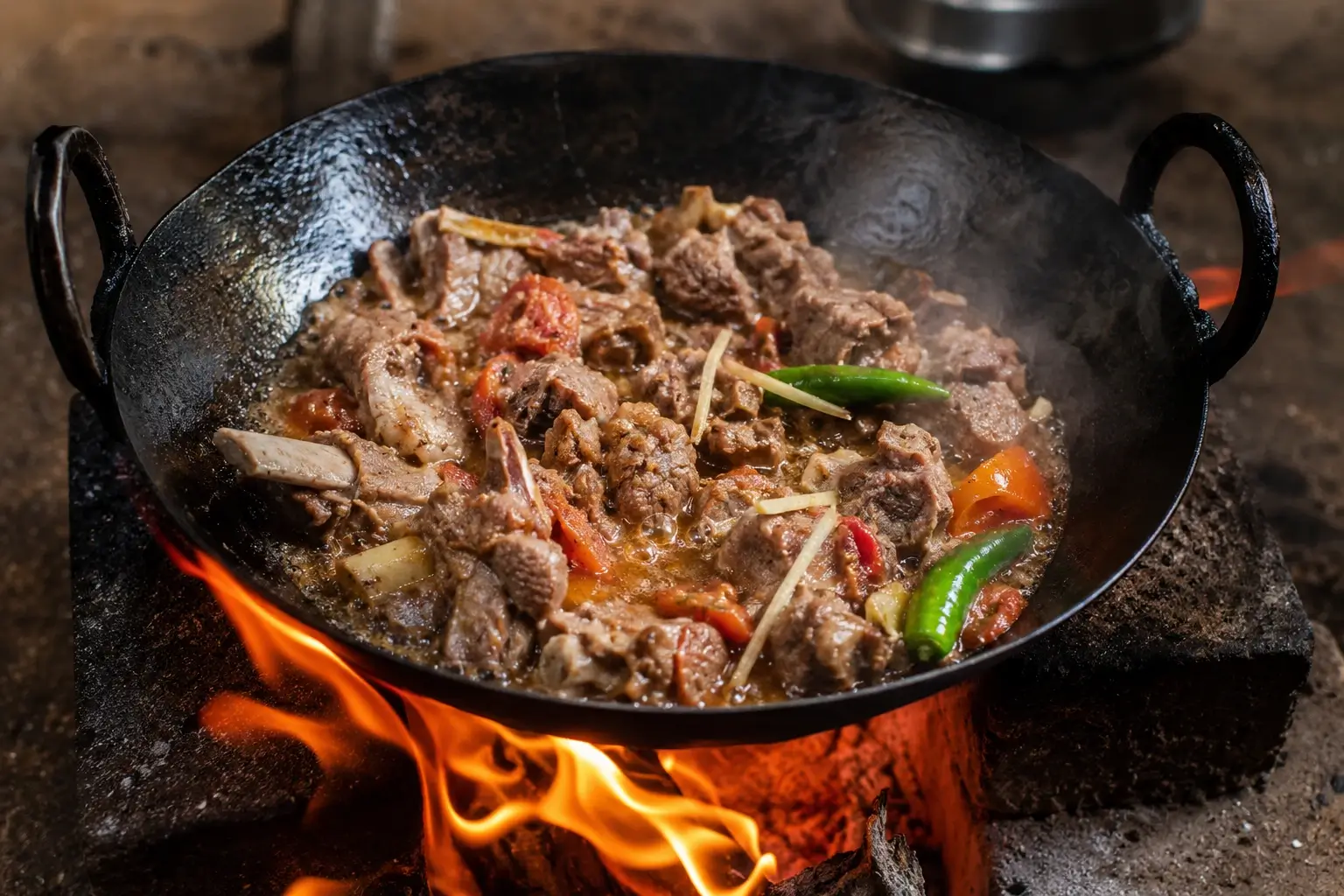
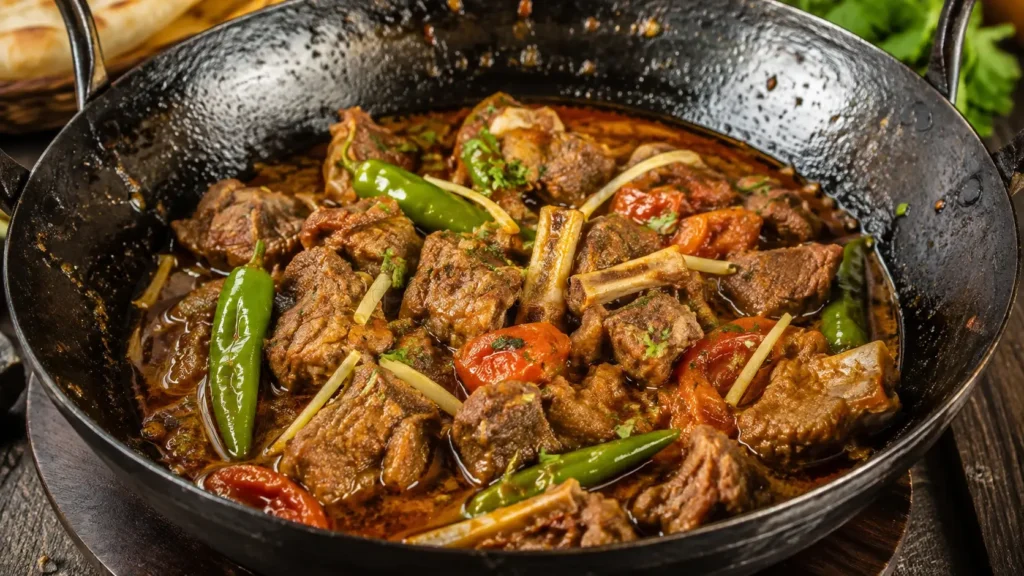
Shinwari karahi is often considered the purest version of the dish. Traditional Shinwari karahi uses only a handful of ingredients: meat (usually mutton or chicken), tomatoes, green chilies, ginger, garlic and salt. Notably absent are the onions, yogurt and heavy garam masala found in Peshawari or Karachi-style karahi.
The meat is cooked in its own fat, released slowly as it sears, rather than in added cooking oil. This gives Shinwari karahi its glossy, slightly oily finish and a flavor that leans savory rather than tangy or spicy. Restaurants that add cream, extra masala or a tomato-heavy gravy are technically serving a fusion version rather than traditional Shinwari karahi.
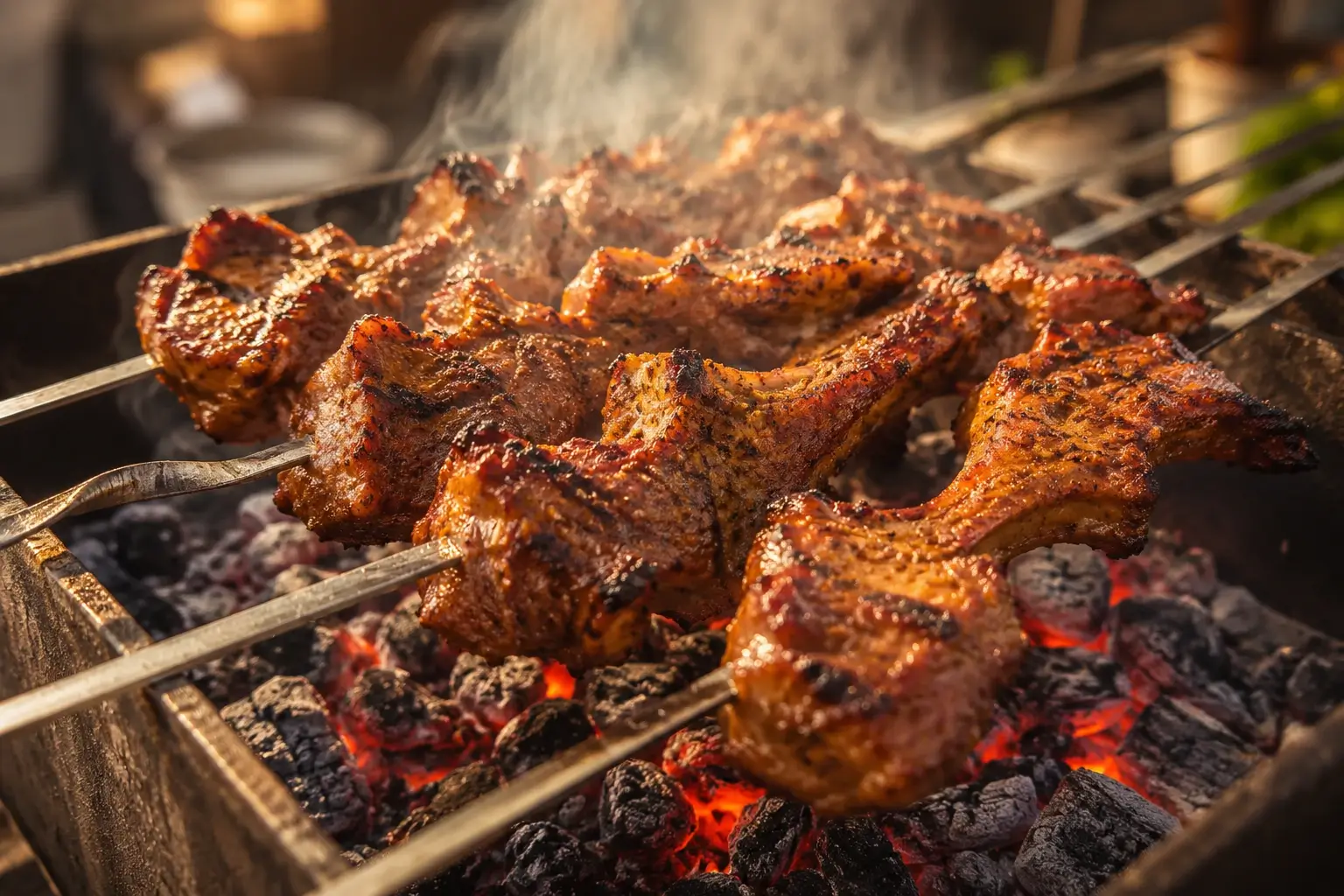
Tikka in the Shinwari tradition refers to skewered, chargrilled meat, typically mutton chops or boti, marinated lightly with salt, black pepper and sometimes a touch of vinegar or raw papaya to tenderize it. Unlike tikka styles that rely on red chili powder and yogurt-based marinades, Shinwari tikka is meant to taste smoky and meaty first, with seasoning taking a back seat.
It is traditionally cooked over an open charcoal grill, which is central to the flavor. The high, direct heat sears the outside quickly while keeping the inside tender, a technique suited to the fattier cuts of mutton common in the region.
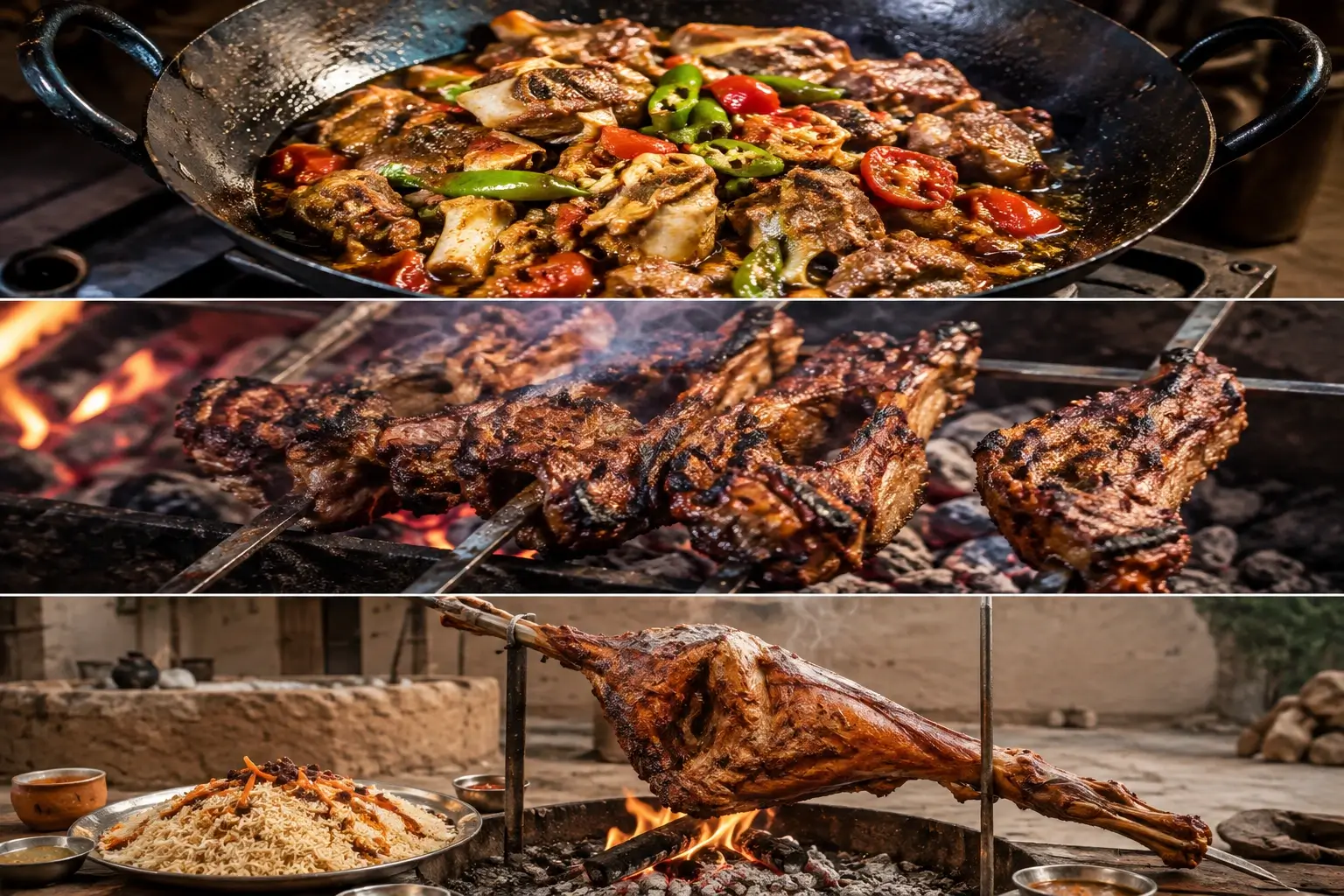
Sajji is arguably the most recognizable Shinwari and broader Pashtun dish outside the region. It consists of a whole leg or side of lamb, marinated only with salt, and occasionally a light coating of raw papaya paste, then skewered and roasted slowly over an open flame or in front of hot coals for several hours.
The defining feature of proper sajji is that it uses no ground spices at all. The dish is often stuffed with rice before or after roasting to absorb the meat's juices, and it is typically served whole at the table to be torn apart by hand rather than pre-cut in the kitchen. This minimal, slow-roasting method is what separates sajji from other whole-roast preparations found elsewhere.
Karahi: Meat cooked in a wok-style pan in its own fat, minimal spices, tomato and green chili base.
Tikka: Skewered chunks or chops, chargrilled over direct heat, salt and pepper marinade.
Sajji: Whole leg of lamb, salt-only marinade, slow-roasted over open flame for hours, served whole.
If you want to try Shinwari-style cooking locally, Shinwari Baithak in DHA Phase 2 serves karahi and grilled options in the traditional style. Portion sizes and pricing vary, so it is worth checking the full menu before ordering.
For more restaurant options in the area, check the DHA Phase 2 restaurant directory.
Get restaurant updates and local food news
📲 Join Our WhatsApp Channel!
Get the latest deals, new menus and restaurant updates for DHA Phase 2 - straight to your WhatsApp.
✅ Join South Islamabad Eats on WhatsAppGet featured on South Islamabad Eats and reach food lovers searching for places like yours.
Get Featured - From Rs 2,500