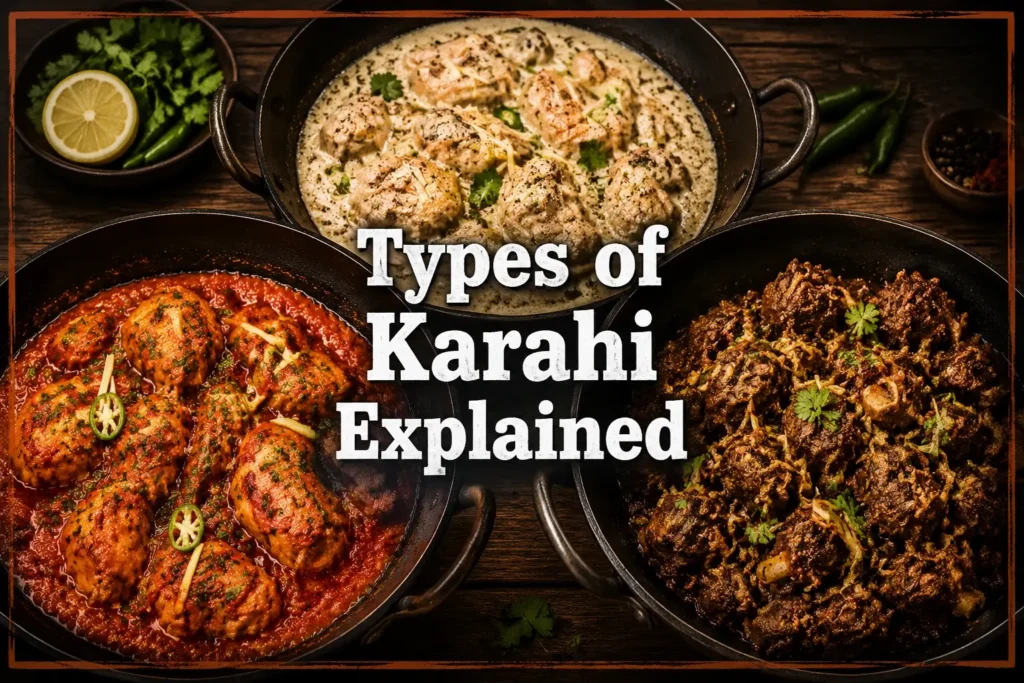
Karahi is one of the most ordered dishes across Pakistan, but not all karahi is the same. White karahi, bhuna gosht, and the more common tomato-based karahi all use different techniques and ingredients, even though menus often list them side by side without explanation. South Islamabad Eats breaks down what actually separates these styles so you know what to expect before you order, and how to make each one at home.
If you want to try a few styles without spending too much, several karahi portions across the area fall within our under Rs 500 page, which lists wholesome meals at accessible prices.
This guide covers the main types of karahi found in DHA Phase 2 restaurants, how white karahi and bhuna gosht are made, and how they compare to the standard tomato-based version most people know.
Technically, karahi refers to the cooking vessel, a wide, deep, wok-shaped pan, not the dish itself. Over time the name became attached to a specific style of cooking meat directly in that pan over high heat, usually with tomatoes, ginger, garlic and green chilies forming the base. What varies between regions and restaurants is how much beyond that base gets added, and that is where the different styles come from.
This is the version most commonly served across Pakistani restaurants, including in DHA Phase 2. Chicken or mutton is cooked in oil or ghee with a tomato base, ginger, garlic, green chilies and a moderate spice mix. The tomatoes break down into a thick, glossy sauce that coats the meat. It sits in the middle ground between the richness of bhuna gosht and the simplicity of white karahi, which is part of why it remains the most popular version on menus.
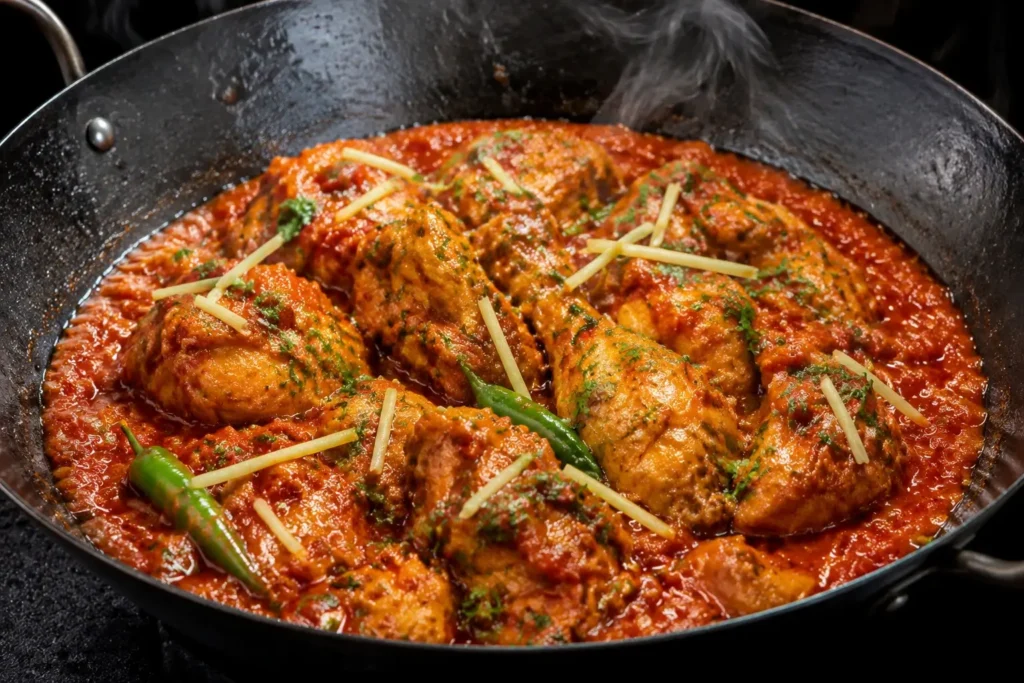
Ingredients (serves 4):
Method:
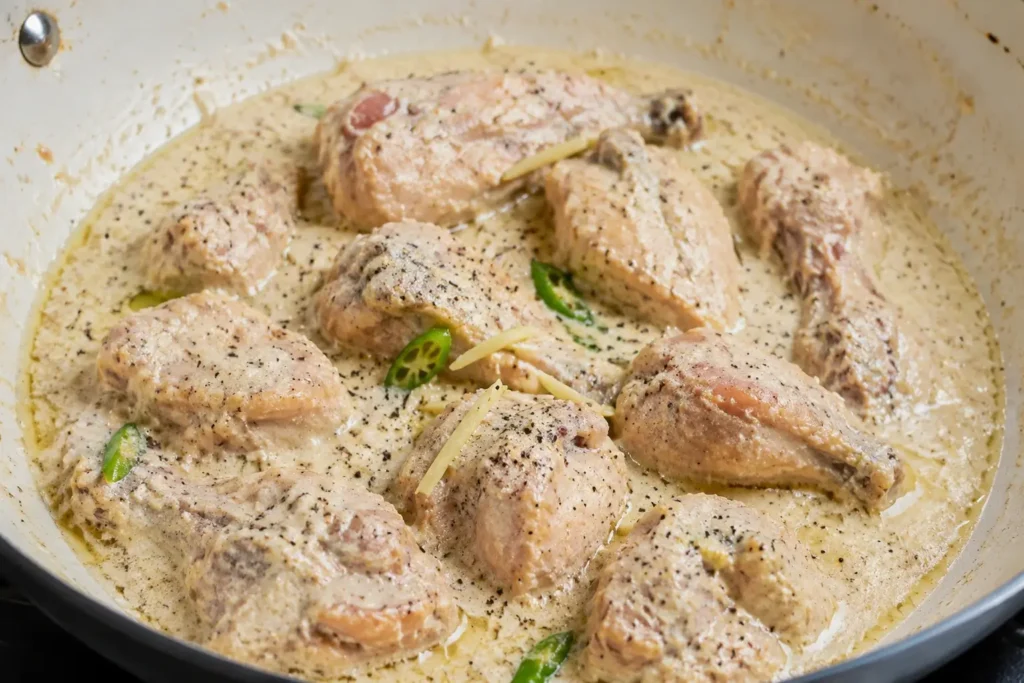
White karahi skips tomatoes and red chili powder entirely, relying instead on yogurt, cream, green chilies and whole spices like black pepper and cardamom for flavor. The result is a lighter-colored, milder dish with a creamy rather than tangy character. Because there is no tomato acidity to balance, white karahi tends to taste richer and more subtle, closer to a Mughlai-style preparation than a typical spicy karahi.
This style is often confused with the Peshawari or Shinwari version of karahi, but the two are different. Shinwari karahi is unspiced and cooked in the meat's own fat with tomatoes and chilies, while white karahi deliberately avoids tomatoes altogether and uses dairy as its base instead.
Ingredients (serves 4):
Method:
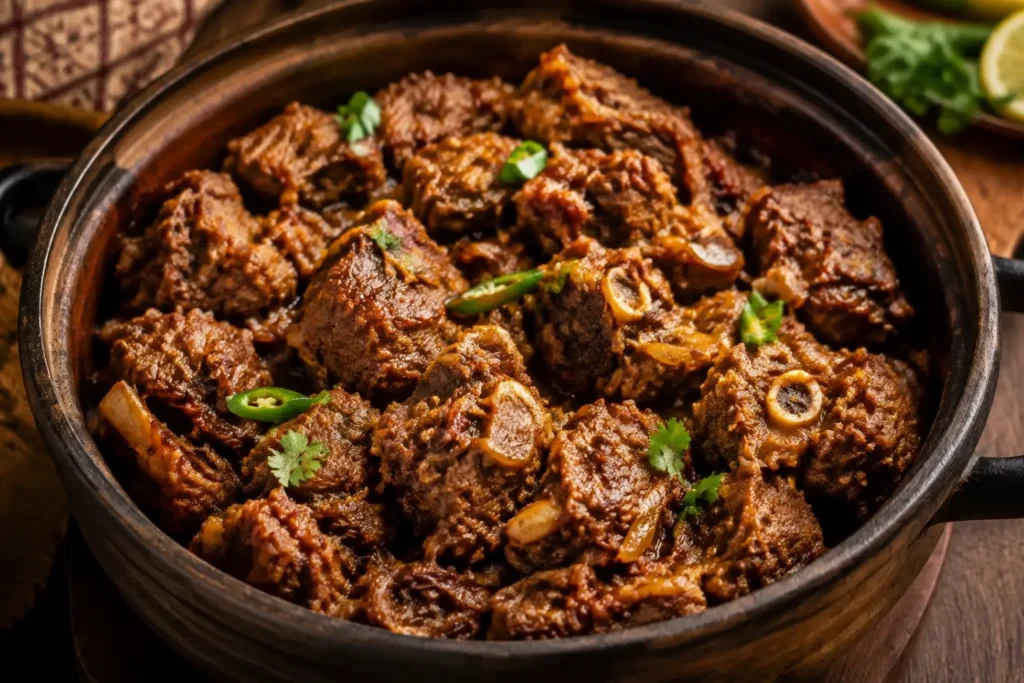
Bhuna gosht is not technically a karahi at all, though it is frequently grouped with karahi dishes on menus because of a similar cooking method. "Bhuna" refers to a slow, dry-roasting technique where meat is cooked down with onions, tomatoes and a fuller spice blend, including garam masala, until the oil separates and the masala clings tightly to the meat rather than forming a sauce.
The key difference from karahi is onions. Karahi in its traditional form is typically onion-free, while bhuna gosht relies on a heavy onion base cooked down until caramelized, giving it a deeper, more layered flavor and a drier, thicker consistency than karahi.
Ingredients (serves 4):
Method:
Tomato Karahi: Tomato and green chili base, moderate spice, most common style.
White Karahi: No tomatoes, yogurt and cream base, mild and rich, whole spices only.
Bhuna Gosht: Heavy onion base, dry-roasted, garam masala forward, thicker and drier than karahi.
For a traditional, minimal-spice take on karahi, Shinwari Baithak serves it in the tribal style with meat cooked in its own fat. For desi-style karahi and bhuna dishes, Quetta Kettli in Central Park is worth checking. Menus and pricing vary, so confirm the exact style before ordering if you have a preference.
For more restaurant options in the area, check the DHA Phase 2 restaurant directory.
Get restaurant updates and local food news
📲 Join Our WhatsApp Channel!
Get the latest deals, new menus and restaurant updates for DHA Phase 2 - straight to your WhatsApp.
✅ Join South Islamabad Eats on WhatsAppGet featured on South Islamabad Eats and reach food lovers searching for places like yours.
Get Featured - From Rs 2,500