Doner kebab has become one of the most popular quick-service options across DHA Phase 2, but most people ordering a wrap or plate have never seen how the dish actually gets its name or its signature flavor. South Islamabad Eats breaks down where doner kebab comes from, how it is traditionally prepared, and what separates a proper doner from a regular grilled or fried kebab.
If you want to try it without spending much, several doner options and wraps across the area fall within our under Rs 500 page, which lists wholesome meals at accessible prices.
This guide covers the Turkish origins of doner kebab, how the vertical rotisserie method works, a simple home version you can make without a rotisserie, and where to try it locally.
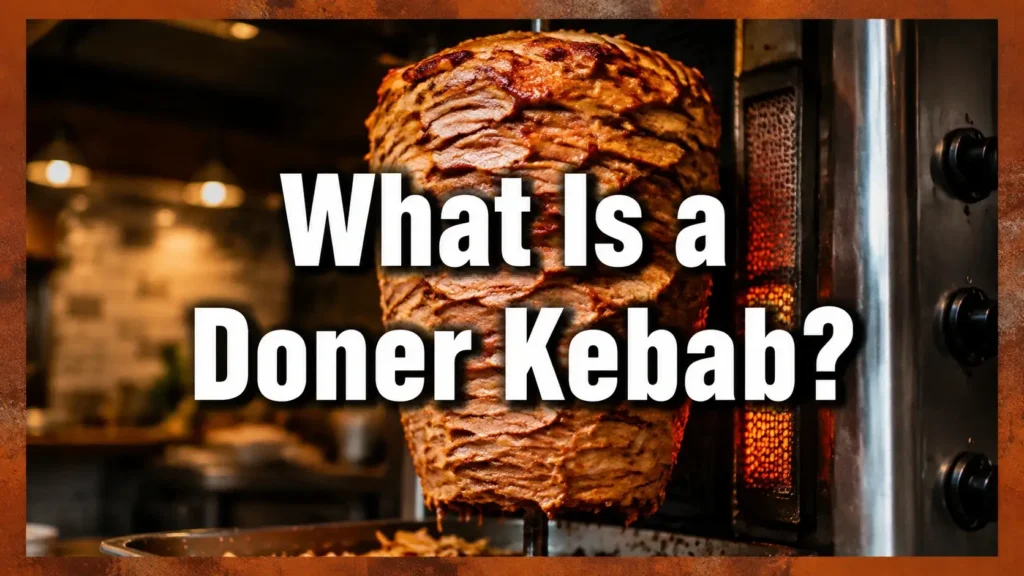
Doner kebab originated in Turkey, with the name coming from the Turkish word "donmek," meaning "to turn" or "to rotate." It refers to meat, traditionally lamb, beef or chicken, that is stacked in layers on a vertical rotisserie called a doner spit and cooked slowly as it rotates in front of a heat source. As the outer layer cooks, it is shaved off in thin slices, which is the meat you actually get served, whether in a wrap, a plate, or a roll.
What makes doner distinct from a regular grilled kebab is this rotisserie method itself. The constant slow rotation allows the meat to self-baste in its own juices and fat as it cooks, producing a texture that is crisp on the outside edges and tender within, something a flat grill or pan cannot fully replicate.
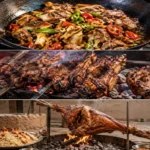
The process starts with thin slices or ground and pressed layers of marinated meat, stacked onto a vertical skewer to form a large cone shape, sometimes weighing several kilograms. The marinade typically includes yogurt, garlic, paprika, cumin, and other regional spices depending on the country, though the exact blend varies widely between Turkish, Middle Eastern and South Asian versions.
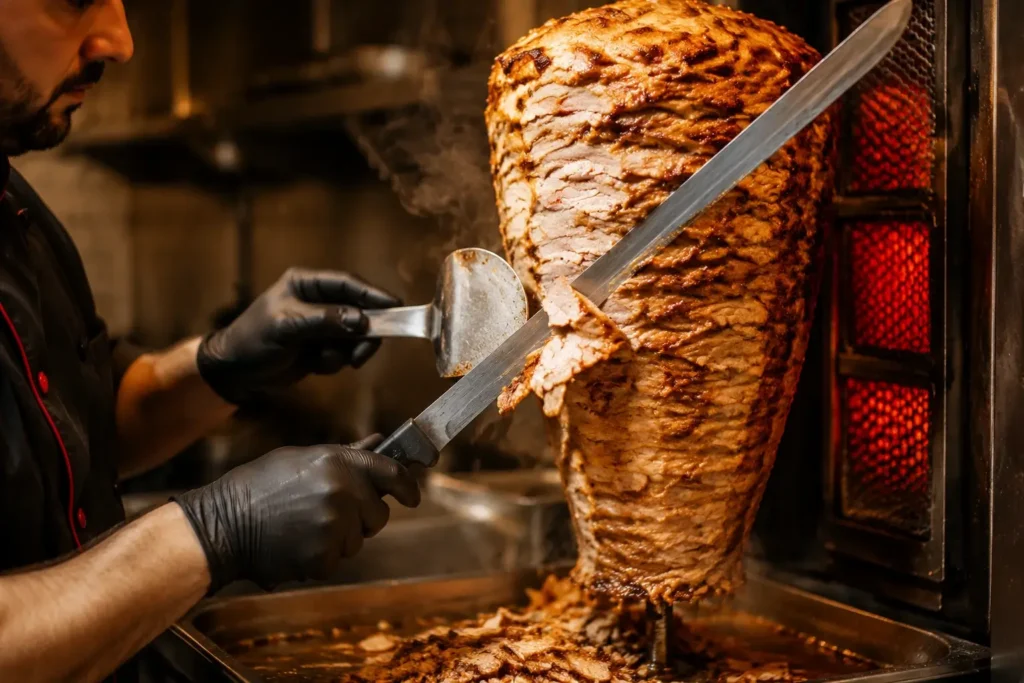
The stacked meat cone rotates continuously in front of a vertical heat source, traditionally gas or electric, though charcoal versions exist too. As the outside of the cone cooks and browns, a chef shaves off thin slices using a long knife, working from top to bottom as each layer finishes cooking. This shaving process is repeated throughout service, meaning the outer layer being served is always freshly cooked rather than sitting pre-cooked and reheated.
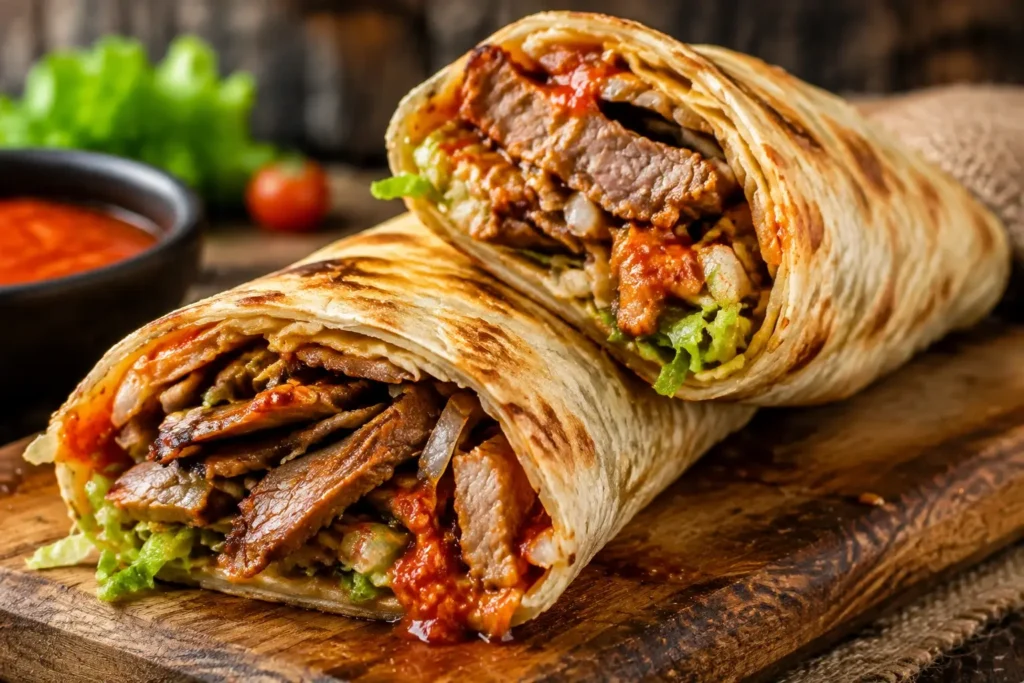
The shaved meat is then typically served wrapped in flatbread or pita with vegetables and sauce, stuffed into a roll, or served as a plate alongside rice or fries.
Ingredients (serves 4):
Method:
Doner Kebab: Turkish origin, vertical rotisserie, typically lamb, beef or chicken, yogurt and spice marinade.
Shawarma: Middle Eastern variation of the same rotisserie method, often more heavily spiced with cumin, coriander and turmeric, commonly served with garlic sauce or tahini.
Gyro: Greek version, usually pork or a lamb-beef blend, seasoned with oregano and served with tzatziki rather than garlic or chili sauce.
Locally, doner-style meat is often adapted into rolls rather than the traditional pita wrap, which is how it appears on menus like Ali Baba Doner Kebab and in fusion items like the Hot n Spicy Roll. These versions typically use the same shaved, rotisserie-style meat as a base but pair it with local flavors such as chili garlic sauce, coleslaw, or a spicier chutney instead of the traditional yogurt-based garlic sauce, and wrap it in a paratha-style roll instead of pita or flatbread.
This adaptation keeps the defining trait of doner intact, thin, self-basted, rotisserie-shaved meat, while adjusting the surrounding flavors to match local taste preferences for heat and spice.
For a dedicated doner kebab menu, Ali Baba Doner Kebab is a solid starting point in the area. If you want a spicier, roll-style take on the same shaved meat, Hot n Spicy Roll offers a local twist worth trying. Menus and pricing vary, so it is worth checking the full menu before ordering.
For more restaurant options in the area, check the DHA Phase 2 restaurant directory.
Get restaurant updates and local food news
📲 Join Our WhatsApp Channel!
Get the latest deals, new menus and restaurant updates for DHA Phase 2 - straight to your WhatsApp.
✅ Join South Islamabad Eats on WhatsAppGet featured on South Islamabad Eats and reach food lovers searching for places like yours.
Get Featured - From Rs 2,500