Daig Pulao vs Biryani: What's the Difference?
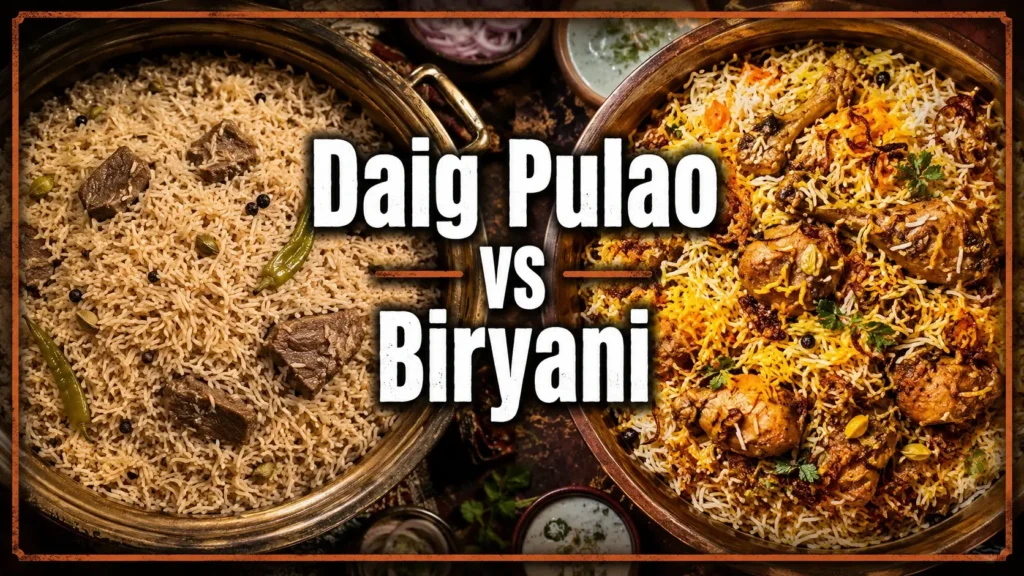
Daig pulao and biryani often sit side by side on the same menu in DHA Phase 2, and at first glance the rice and meat combination can look identical. But the two dishes come from different cooking traditions and are prepared in noticeably different ways. South Islamabad Eats breaks down what actually separates daig pulao from biryani, and how to make a simple version at home.
If you want to try either dish without spending too much, several rice-based meals across the area fall within our under Rs 500 page, which lists wholesome meals at accessible prices.
This guide covers how daig pulao and biryani are traditionally cooked, why one is spicier and more layered than the other, and where to try daig pulao locally.
What Is Daig Pulao?
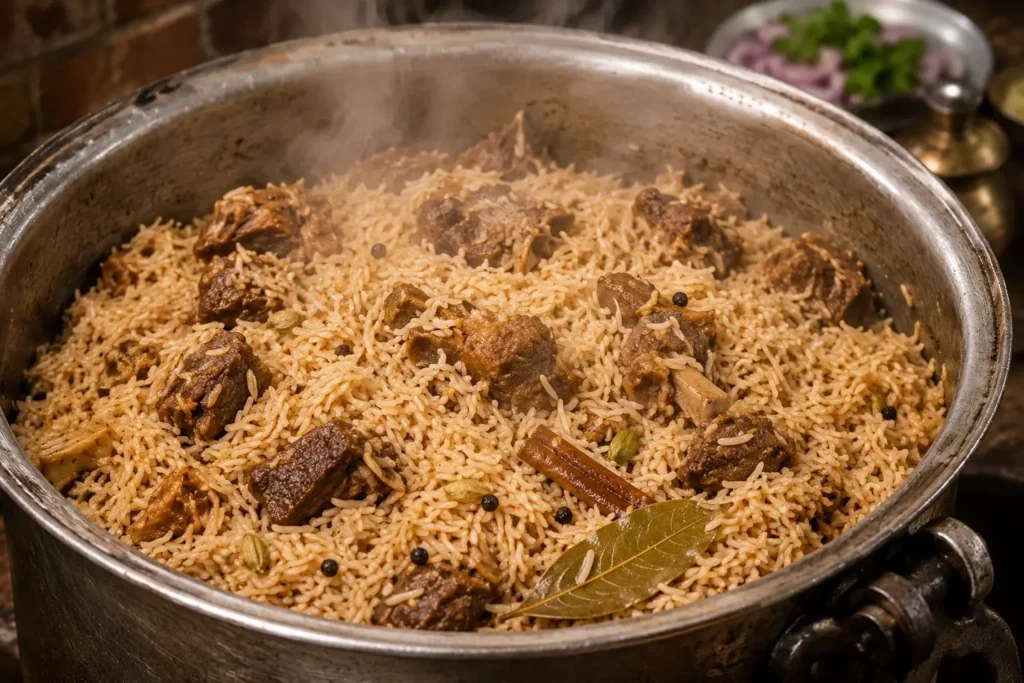
Daig pulao takes its name from the "daig," a large, wide cooking pot traditionally used to prepare food in bulk for weddings, gatherings and communal events across Pakistan. The dish itself is a rice and meat preparation where both are cooked together in the same pot using a stock or broth made from the meat, rather than being layered separately.
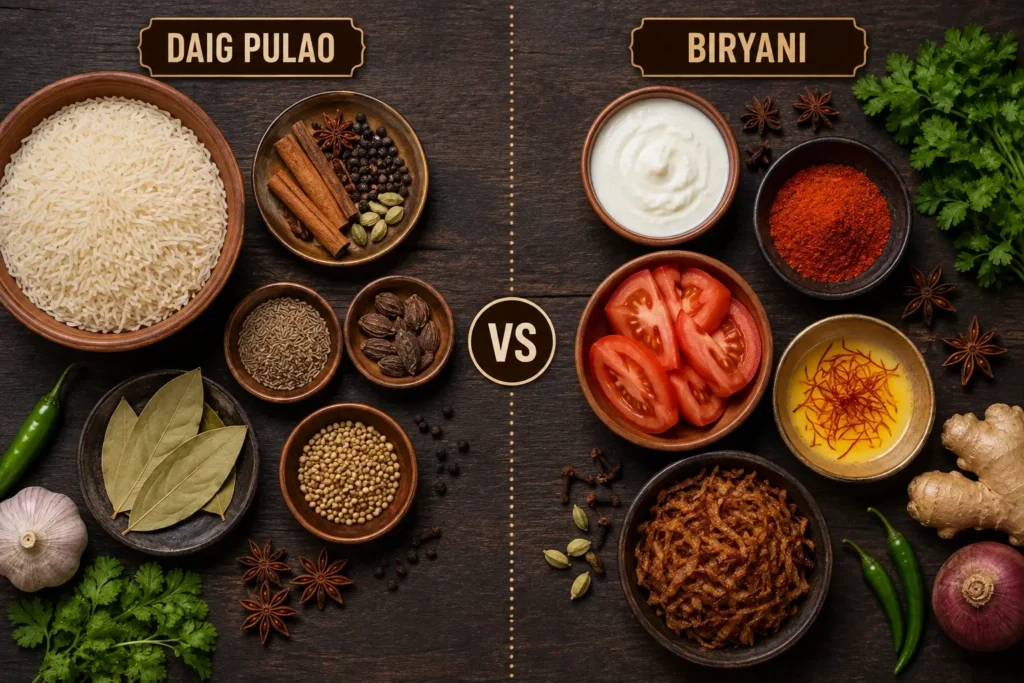
The defining trait of daig pulao is simplicity. Whole spices such as cumin, bay leaf, cinnamon and black cardamom are used to flavor the stock, but the dish avoids heavy red chili powder or a thick masala base. The rice absorbs the meat's broth directly as it cooks, giving daig pulao its light brown color and a flavor that is savory and aromatic rather than spicy.
What Is Biryani?
Biryani, by contrast, is built around layering. Meat is first cooked separately in a rich, spiced masala, often including yogurt, tomatoes, red chili powder and a garam masala blend, sometimes with additional souring agents like lemon juice. The rice is parboiled separately, then layered with the cooked meat in the same pot and finished using the "dum" method, a slow steam-cooking technique where the pot is sealed and cooked on low heat so the flavors and aromas of the meat layer infuse upward into the rice.
This layering and sealed steaming process is what gives biryani its distinct pockets of flavor throughout the rice, along with its characteristic color from saffron or food coloring, something daig pulao does not typically use.